Virgin Mobile Freefest
Merriweather Post Pavilion, Columbia, MD
August 30
I packed my rainboots for Virgin Mobile Freefest but was surprised by beautiful sun, while the grounds of Merriweather Post Pavilion (made famous by Animal Collective) provided shady space for listening to the diverse acts. The Pavilion Stage lineup focused on the mainstream, while the West Stage was a mix of indie and...Public Enemy. Still trying to figure that out.
The first band I caught was Taking Back Sunday, who were the day’s biggest disappointment. Plagued by fuzzy sound that was further marred by sludgy dance tent echo, their songs seemed largely the same, a mix of unclear guitars and middling vocals. Even the afternoon sun was against them; the pavilion’s shadow was so deep that the band was completely obscured for lawn viewers, eliminating the chance for a redeeming stage presence.
Next up were Jet, who topped Taking Back Sunday but didn’t thrill. Their sound quality was far better, but it couldn’t negate the fact that the majority of their songs sounded similar. Crowd pleasers like ‘Are You Gonna Be My Girl’ and ‘Cold Hard Bitch’ delivered, but new tracks fell flat.
Jet were followed by The Bravery. Their new songs sounded similar to the old, so favorites like ‘An Honest Mistake’ carried the set. The Bravery are technically solid but I found that they lacked a crucial energy live. Moments like the sharp opening bass line of ‘Believe’ drew me in, but others, like a loping version of “Time Won’t Let Me Go,’ didn’t hold my attention. One interesting moment-- Sam Endicott introduced new track ‘Jack o’ Lantern Man’ as ‘a song about a guy I fucking hate.’ Still curious who that is.
Awaiting Weezer, the crowd was treated to the spectacle of two parachutists jumping from a helicopter onto the roof of the pavilion, where they shared champagne with unexpected guest Richard Branson. The parachutists and Weezer were the biggest surprises of the night; Weezer nailed their set with upbeat energy and technical prowess. Opening with a snippet of ‘War Pigs,’ they moved to ‘Hash Pipe’ and ‘Undone (The Sweater Song),’ perfect tracks to engage the expanding crowd. New single ‘(If You’re Wondering If I Want You To) I Want You To’ was enjoyably uptempo and followed by classics like ‘Buddy Holly’ and ‘Say It Ain’t So.’
Memories of middle school prompted me to stay for Blink-182 instead of catching Girl Talk (a terrible mistake). My notes read, in full, ‘Damn annoying.’ Blink’s musical skill was mediocre at best and Tom DeLonge reveled in childish stage banter that revolved around how many obscenities he could fit into an intro. (The songs were not as ‘fucking awesome’ as he thought, and they certainly didn’t ‘blow [my] dick off.’) After enduring a few tracks including ‘Rock Show,’ I cut my losses and left for Franz Ferdinand.
The criminally underpopulated West Stage hosted Franz’s set, which could be faulted only for excessive smoke machine use, obscuring louchely energetic frontman Alex Kapranos and guitarist Nick McCarthy as sharp opener ‘This Fire’ got the crowd moving. Standouts included the terrific ‘No You Girls,’ a stomp through ‘Take Me Out,’ and ‘Outsiders,’ which saw the entire band attacking the drum kit for an extended outro. ‘Turn It On’ and ‘Tell Her Tonight’ lagged, but the encore solidified the band’s place as my favorite of the day. Energetic ‘Michael’ and ‘Darts of Pleasure’ preceded a stunning version of ‘Lucid Dreams.’ While the sprawling keyboard solo that concluded the track might have challenged casual listeners, it was a joy for fans. Kapranos and McCarthy created extended waves of sound on multiple keyboards, layering beats carefully for nearly fifteen minutes before letting the track fade to drums as waves of residual smoke roiled across the stage.
Wednesday, September 2, 2009

Friday, August 28, 2009
Bang Bang Rock and Roll
Art Brut sagely advises, “Stop buying your albums from the supermarket,” and people have taken heed. In light of constantly dwindling album sales, I like reading the somewhat quaintly outdated US Neilson Soundscan chart. The thing about the chart that interests me most is what’s not selling - it reflects little about the music (predominantly rock and indie) that most people I know enjoy .
In fairness, my friends and I spend a lot of time on independent music websites; we’re not exactly the Lady Gaga fan club. But I assumed that Lady Gaga and her Top 40 contemporaries would dominate sales, so the country and rap albums that populate the top 20 surprise me, as does the lack of rock besides Nickelback and their abysmal sound-alikes. The sole entry that could even remotely (at this point, incredibly remotely) be termed indie in last week’s chart was Kings of Leon. Where is the music that my friends listen to? Hell, where is the music that my parents listen to?
Country is easy to understand; its audience skews older, making their conversion to digital music slower. And country fans are fiercely loyal to their favourite artists; purchasing an album is a sure way to support Carrie Underwood or George Strait (whose albums are certified 68x platinum - talk about loyalty).
Rap is harder to explain. Its fans are young, and considering the number of new rappers charting, it’s safe to say they don’t have much “brand loyalty”. My best guess is that music blogs just aren’t hosting the latest rap leak, so listeners access their music the old fashioned (or just legal) way. In an unscientific test, I searched high-charting rapper Fabolous and indie newcomers The XX on blog aggregator elbo.ws. The results? 236 hits for Fabolous, and 1256 for The XX, who released their debut in America just last week. Fans might want to get their music online, but the option just isn’t there to the same extent.
The obvious opposing question is: Why aren’t rock fans buying albums? I polled some friends and the feedback was universal: none of them buy CDs because the blog culture that ignores rap is a bounty of indie and rock. One said she hadn’t bought a physical album in “about five years” because access to music online is instant and expansive. These genres also aren’t charting because many albums are impossible to find for fans who are loyal enough to buy. A friend in northern California told me she’d been conducting a futile search for the new Maccabees CD. Online sales solve some of these problems, but I still find delayed release dates for international artists a frustrating issue. What about older fans? Some have gone really old school; I recently saw a friend’s father firing up a turntable for vintage rock records instead of CDs or an iPod. Others, like my parents, have become downloaders by proxy, snagging new music that I recommend.
Final question: why do more diverse albums chart in the UK? As I write, Arctic Monkey’s 'Humbug' is on track for number one. Part of the difference is attributable to the music culture; mainstream media focuses more on rock and indie, getting bands like Muse, White Lies, and Kings of Leon out from under the radar quickly and attracting fans who aren’t online specifically to sample new music. Another difference lies in record stores. Independents like Rough Trade stock albums that are hard to get in America, and even HMV has a selection that puts most US shops to shame. Fans like my Maccabees-seeking friend are more likely to support their favourite bands through album sales if albums are available.
So how can the American chart change? Honestly, I’m not sure. Better distribution, online and in stores, seems to be step one, but indie bands also have to win back ravenous music lovers who download for maximum exposure to new music. The silver lining? Rampant downloading creates hordes of new fans who come out to gigs. In fact, I’d love to see a gig chart. Maybe Nickelback wouldn’t be on it.
In fairness, my friends and I spend a lot of time on independent music websites; we’re not exactly the Lady Gaga fan club. But I assumed that Lady Gaga and her Top 40 contemporaries would dominate sales, so the country and rap albums that populate the top 20 surprise me, as does the lack of rock besides Nickelback and their abysmal sound-alikes. The sole entry that could even remotely (at this point, incredibly remotely) be termed indie in last week’s chart was Kings of Leon. Where is the music that my friends listen to? Hell, where is the music that my parents listen to?
Country is easy to understand; its audience skews older, making their conversion to digital music slower. And country fans are fiercely loyal to their favourite artists; purchasing an album is a sure way to support Carrie Underwood or George Strait (whose albums are certified 68x platinum - talk about loyalty).
Rap is harder to explain. Its fans are young, and considering the number of new rappers charting, it’s safe to say they don’t have much “brand loyalty”. My best guess is that music blogs just aren’t hosting the latest rap leak, so listeners access their music the old fashioned (or just legal) way. In an unscientific test, I searched high-charting rapper Fabolous and indie newcomers The XX on blog aggregator elbo.ws. The results? 236 hits for Fabolous, and 1256 for The XX, who released their debut in America just last week. Fans might want to get their music online, but the option just isn’t there to the same extent.
The obvious opposing question is: Why aren’t rock fans buying albums? I polled some friends and the feedback was universal: none of them buy CDs because the blog culture that ignores rap is a bounty of indie and rock. One said she hadn’t bought a physical album in “about five years” because access to music online is instant and expansive. These genres also aren’t charting because many albums are impossible to find for fans who are loyal enough to buy. A friend in northern California told me she’d been conducting a futile search for the new Maccabees CD. Online sales solve some of these problems, but I still find delayed release dates for international artists a frustrating issue. What about older fans? Some have gone really old school; I recently saw a friend’s father firing up a turntable for vintage rock records instead of CDs or an iPod. Others, like my parents, have become downloaders by proxy, snagging new music that I recommend.
Final question: why do more diverse albums chart in the UK? As I write, Arctic Monkey’s 'Humbug' is on track for number one. Part of the difference is attributable to the music culture; mainstream media focuses more on rock and indie, getting bands like Muse, White Lies, and Kings of Leon out from under the radar quickly and attracting fans who aren’t online specifically to sample new music. Another difference lies in record stores. Independents like Rough Trade stock albums that are hard to get in America, and even HMV has a selection that puts most US shops to shame. Fans like my Maccabees-seeking friend are more likely to support their favourite bands through album sales if albums are available.
So how can the American chart change? Honestly, I’m not sure. Better distribution, online and in stores, seems to be step one, but indie bands also have to win back ravenous music lovers who download for maximum exposure to new music. The silver lining? Rampant downloading creates hordes of new fans who come out to gigs. In fact, I’d love to see a gig chart. Maybe Nickelback wouldn’t be on it.
Monday, August 3, 2009
When your feet get wet at a Coldplay show/What could be worse?
All Points West
Aug 1-2, Liberty State Park, NJ
I thought I could escape the murky conditions that plague U.K. festivals by attending All Points West, but rain and mud made a transatlantic trip, turning the weekend into a damp experience. Skipping stormy Friday, I trekked from Manhattan to New Jersey and kicked off Saturday with Arctic Monkeys. Against the backdrop of the Statue of Liberty, Turner and Co. started their set with ‘Pretty Visitors,’ which has a guitar-crunching chorus tailor-made for live performances. They sprinted through ‘Brianstorm,’ then introduced ‘Potion Approaching,’ another new addition that sadly lacked ‘Visitors’ punch. ‘Fluorescent Adolescent’ got the crowd going and was followed by ‘Cornerstone,’ possibly my favorite track from Humbug. Other standouts were slinky ‘My Propeller’ and perennial favorite ‘I Bet You Look Good on the Dancefloor.’ Strangely, the song tempo sometimes lagged, so the sense of witty urgency that characterizes the Monkeys didn’t always translate.
A wander across the park brought me to Chairlift, closing with ‘Bruises,’ the single made famous on U.S. iPod ads. The rest of their set was unremarkable, stronger for its instrumentals than for Caroline Polacheck’s occasionally shrill vocals. Tokyo Police Club woke the post-Chairlift crowd with energetic performance, which my friends and I voted a pleasant surprise.
Tool was Saturday’s headliner, but I opted for Crystal Castles along with the rest of the attendees not wearing Tool t-shirts (apparently a prerequisite for their gigs). Alice Glass appeared waving a spotlight above her head to compliment the stark lights that synced with their chilly electro. Highlights included ‘Crimewave,’ cleverly echoed in stuttering samples throughout the set, and crowd favorite ‘Courtship Dating.’ Glass, despite her frenetic, equipment-climbing energy, was entirely drowned out by Ethan Kath’s compelling layers of fuzzy sound and shrill keyboard. In spite of this, the crowd was one of the most hyped of the weekend and the set made a great end to day one.
Sunday morning downpours churned the ground into an inexplicably foul-smelling sea of mud that worsened as the day went on. My long-suffering friends and I caught the end of Silversun Pickups, who were unexpectedly high-energy given their laid back album vibe. Underwhelmed, I left after ‘Lazy Eye’ and sloshed off to We Are Scientists, whose older tracks got the most crowd response. ‘Nobody Move, Nobody Get Hurt’ was by far the favorite, although I was disappointed that a late start abbreviated them to six tracks.
Mud rising steadily, I trekked to the main stage. With the rain over, the crowd sprawled on ponchos and raincoats to see Elbow, Echo and the Bunnymen, and headliner Coldplay. I arrived to find Guy Garvey introducing ‘Grounds for Divorce,’ a perfect song for large festival crowds. ‘Divorce’ combined with sweeping, violin-tinged closer ‘On a Day Like This’ put Elbow in competition for the technically strongest band of the weekend.
Brooding Echo and the Bunnymen seemed subdued in comparison. Opener ‘Lips Like Sugar’ was my favorite track, although the pair in front of me enthusiastically doing yoga (yes, seriously, not a euphemism, actually doing yoga) preferred a sparkling version of ‘Bring on the Dancing Horses.’ They closed with what Ian McCulloch called a ‘holy trinity’ including ‘The Killing Moon’ and wonderfully dark ‘The Cutter.’
The sun set before Coldplay, who opened with booming ‘Violet Hill,’ followed by the angular lasers of ‘Clocks’ against Manhattan’s skyline. Chris Martin proclaimed APW “the strangest smelling festival,” altering the lyrics of ‘Fix You’ to “When your feet get wet at a Coldplay show/ What could be worse?” They included a gorgeous take on ‘Lovers in Japan’ and a cluster of acoustic songs played in the crowd, including a decent but unremarkable cover of ‘Billie Jean’ ‘The Scientist’ was an ideal encore, with the crowd singing along as the festival concluded.
I skipped the middle of Coldplay to see MGMT. Ankles submerged in disconcertingly warm mud and surrounded by bandanas and paisley, I caught the second half of ‘Of Moons, Birds, and Monsters’ splendidly psychedelic guitars, the terrific crescendos of ‘Weekend Wars,’ and new track ‘It’s Working.’ ‘Kids’ was sharp and catchy, and ‘Electric Feel’ was enjoyable, although it suffered from nasal vocals. I rejoined my friends and we made our way out through the mix of bog and murky, oceanic puddles. As we crossed the central swamp my sandal was ripped apart by the sticky mud and became my final apparel casualty. I headed back to Manhattan soggy and shoeless but satisfied.
Aug 1-2, Liberty State Park, NJ
I thought I could escape the murky conditions that plague U.K. festivals by attending All Points West, but rain and mud made a transatlantic trip, turning the weekend into a damp experience. Skipping stormy Friday, I trekked from Manhattan to New Jersey and kicked off Saturday with Arctic Monkeys. Against the backdrop of the Statue of Liberty, Turner and Co. started their set with ‘Pretty Visitors,’ which has a guitar-crunching chorus tailor-made for live performances. They sprinted through ‘Brianstorm,’ then introduced ‘Potion Approaching,’ another new addition that sadly lacked ‘Visitors’ punch. ‘Fluorescent Adolescent’ got the crowd going and was followed by ‘Cornerstone,’ possibly my favorite track from Humbug. Other standouts were slinky ‘My Propeller’ and perennial favorite ‘I Bet You Look Good on the Dancefloor.’ Strangely, the song tempo sometimes lagged, so the sense of witty urgency that characterizes the Monkeys didn’t always translate.
A wander across the park brought me to Chairlift, closing with ‘Bruises,’ the single made famous on U.S. iPod ads. The rest of their set was unremarkable, stronger for its instrumentals than for Caroline Polacheck’s occasionally shrill vocals. Tokyo Police Club woke the post-Chairlift crowd with energetic performance, which my friends and I voted a pleasant surprise.
Tool was Saturday’s headliner, but I opted for Crystal Castles along with the rest of the attendees not wearing Tool t-shirts (apparently a prerequisite for their gigs). Alice Glass appeared waving a spotlight above her head to compliment the stark lights that synced with their chilly electro. Highlights included ‘Crimewave,’ cleverly echoed in stuttering samples throughout the set, and crowd favorite ‘Courtship Dating.’ Glass, despite her frenetic, equipment-climbing energy, was entirely drowned out by Ethan Kath’s compelling layers of fuzzy sound and shrill keyboard. In spite of this, the crowd was one of the most hyped of the weekend and the set made a great end to day one.
Sunday morning downpours churned the ground into an inexplicably foul-smelling sea of mud that worsened as the day went on. My long-suffering friends and I caught the end of Silversun Pickups, who were unexpectedly high-energy given their laid back album vibe. Underwhelmed, I left after ‘Lazy Eye’ and sloshed off to We Are Scientists, whose older tracks got the most crowd response. ‘Nobody Move, Nobody Get Hurt’ was by far the favorite, although I was disappointed that a late start abbreviated them to six tracks.
Mud rising steadily, I trekked to the main stage. With the rain over, the crowd sprawled on ponchos and raincoats to see Elbow, Echo and the Bunnymen, and headliner Coldplay. I arrived to find Guy Garvey introducing ‘Grounds for Divorce,’ a perfect song for large festival crowds. ‘Divorce’ combined with sweeping, violin-tinged closer ‘On a Day Like This’ put Elbow in competition for the technically strongest band of the weekend.
Brooding Echo and the Bunnymen seemed subdued in comparison. Opener ‘Lips Like Sugar’ was my favorite track, although the pair in front of me enthusiastically doing yoga (yes, seriously, not a euphemism, actually doing yoga) preferred a sparkling version of ‘Bring on the Dancing Horses.’ They closed with what Ian McCulloch called a ‘holy trinity’ including ‘The Killing Moon’ and wonderfully dark ‘The Cutter.’
The sun set before Coldplay, who opened with booming ‘Violet Hill,’ followed by the angular lasers of ‘Clocks’ against Manhattan’s skyline. Chris Martin proclaimed APW “the strangest smelling festival,” altering the lyrics of ‘Fix You’ to “When your feet get wet at a Coldplay show/ What could be worse?” They included a gorgeous take on ‘Lovers in Japan’ and a cluster of acoustic songs played in the crowd, including a decent but unremarkable cover of ‘Billie Jean’ ‘The Scientist’ was an ideal encore, with the crowd singing along as the festival concluded.
I skipped the middle of Coldplay to see MGMT. Ankles submerged in disconcertingly warm mud and surrounded by bandanas and paisley, I caught the second half of ‘Of Moons, Birds, and Monsters’ splendidly psychedelic guitars, the terrific crescendos of ‘Weekend Wars,’ and new track ‘It’s Working.’ ‘Kids’ was sharp and catchy, and ‘Electric Feel’ was enjoyable, although it suffered from nasal vocals. I rejoined my friends and we made our way out through the mix of bog and murky, oceanic puddles. As we crossed the central swamp my sandal was ripped apart by the sticky mud and became my final apparel casualty. I headed back to Manhattan soggy and shoeless but satisfied.
Wednesday, June 24, 2009
"Like Girl Talk's hot cousin"
Just a quick note to say that the new Super Mash Bros. album appeared for download this evening and I love it. I can't explain why at all; I feel pretty neutral about other mashup acts like Girl Talk and Ludachrist but SMB makes me want to go outside and run like 15 miles then kickbox or something. Maybe it's the fact that their sampling is so incredibly mainstream, undistorted, and clever. Girl Talk overwhelms me and Ludachrist is too remix/techno, but SMB keeps it recognizable and brings back some entertaining memories of the 90's (Crazy Town's "Butterfly"? Bet you forgot that one existed. Now it's back, crushed into "Technologic" and "Jack and Diane.") Anyway, I might come back to this later but I had to say something about my favorite workout music.
As a side note, my particular favorite from the new album is the terrific splice of Television Rules the Nation/I Kissed a Girl on "Still Bleeding." Their love for The Lonely Island also garners my approval. Check out the albums here, downloadable for free since their content is less than legal:
http://bit.ly/iN9jO (new album)
http://www.lazerwolf.com/ (Their 2008 debut)
As a side note, my particular favorite from the new album is the terrific splice of Television Rules the Nation/I Kissed a Girl on "Still Bleeding." Their love for The Lonely Island also garners my approval. Check out the albums here, downloadable for free since their content is less than legal:
http://bit.ly/iN9jO (new album)
http://www.lazerwolf.com/ (Their 2008 debut)
Sunday, June 7, 2009
O, Valencia!
The Decemberists
Tower Theater, Philadelphia, June 6
When I ventured to Philadelphia's Tower Theater to see The Decemberists, I thought it would be a low-key affair; Tower's shows are all seated and The Decemberists' music tends to be gentle. So I was in for quite the surprise when it turned into one of the most exciting gigs I've seen this year. Opener Robyn Hitchcock was a pleasant if slightly innocuous beginning to the evening, playing a set that shifted between soft, folk-tinged guitar and songs that edged toward a harder sound. The standout of his performance was 'Up to our Nex,' a track that appeared in last year's Rachel Getting Married.
After a brief break, The Decemberists appeared in silhouette against a background that shifted colors moodily throughout the gig. The Portland-based band is normally a five piece, but they've number expanded to an Arcade Fire-rivaling seven with the addition of guest vocalists Shara Worden and Becky Stark. Frontman Colin Meloy got the most cheers when he finally took the stage, kicking off the set with the first track from their latest album, The Hazards of Love.
Hazards consists of 17 songs telling the story of a young woman named Margaret, her rakish lover, a forest queen, and the troubles that inevitably ensue when you combine those characters. It's a beautiful and unusual piece that showcases Meloy's penchant for storytelling, and it demands a unique live presentation. So, during this tour The Decemberists have been playing Hazards in its entirety, a experience that highlights its careful composition and the band's technical prowess.
Hazards is a varied album and a departure for The Decemberists, straying from the gentle, folky sound that characterizes their previous releases in favor of chunkier guitars and a darker overall aesthetic. That's not to say that their love of unusual instrumentation has diminished-- everything from steel guitar to accordion to double bass makes an appearance. Seeing the album as a cohesive whole is transfixing; the way reprises and melodies shift and fold in on each other is magical, and the deliberately symbolic staging and costuming of Stark and Worden underscores the theatrical elements. It's a testament to the band that they reproduce a complex piece live with stunning success, and a gift to fans who get such a singular experience.
Standouts from the first half of the evening included vindictive single "The Rake's Song," which saw five Decemberists drumming at once, and the contrasting delicate harmonies of "An Interlude." The appearance of My Brightest Diamond's Worden, looking like Karen O. and shaking things up with some dance moves and gold leggings during "The Queen's Rebuke/The Crossing," was another highlight, as were Meloy and Stark's duets. "The Wanting Comes in Waves/Repaid" showcased one of the catchiest hooks The Decemberists have produced, twisting guitar that's miles away from Picaresque. They retired for intermission after eerie "Hazards of Love 4 (The Drowned)," then reappeared for a set of older songs that had the audience on its feet for the rest of the night.
The energetic second half of the show brought some classic, mandolin-accented, folktale-laden Decemberists, opening with "Crane Wife 3," flagging a bit through slower tracks "Shiny" and "Sleepless," then breaking out crowd favorite "July July." Unlike the pristine first half, the second set suffered from some sound problems, with Meloy's vocals occasionally getting drowned out by the rest of the band. This did little to diminish the crowd's excitement when he introduced "Dracula's Daughter" as "the worst song I've ever written," pointing out its "douchey" chords before moving on to a gorgeous rendition of "O Valencia!" The showpiece was "Chimbley Sweep," which saw Meloy and guitarist Chris Funk passing their instruments off to some front row fans for an extended interlude. Stark and Worden then returned for an unexpected cover of Heart's "Crazy on You." The encore brought delicate, country-tinged "Bandit Queen," followed by fabulous closer "Sons and Daughters," with Meloy leading an audience singalong of final line "We are the bombs that fade away."
The verdict? The Decemberists should do anything but fade away if they get the appreciation they deserve for this tour with Hazards. Their musical skill and sense for dramatic arrangement shines in both the sprawling new album and their older work (although the first half of the set overshadowed the second), and Meloy is a charismatic and frequently funny leader for the talented group of musicians. If you can experience Hazards as a whole, do so; it's a sparkling and thoughtful piece that stays with you long after the performance ends.
Tower Theater, Philadelphia, June 6
When I ventured to Philadelphia's Tower Theater to see The Decemberists, I thought it would be a low-key affair; Tower's shows are all seated and The Decemberists' music tends to be gentle. So I was in for quite the surprise when it turned into one of the most exciting gigs I've seen this year. Opener Robyn Hitchcock was a pleasant if slightly innocuous beginning to the evening, playing a set that shifted between soft, folk-tinged guitar and songs that edged toward a harder sound. The standout of his performance was 'Up to our Nex,' a track that appeared in last year's Rachel Getting Married.
After a brief break, The Decemberists appeared in silhouette against a background that shifted colors moodily throughout the gig. The Portland-based band is normally a five piece, but they've number expanded to an Arcade Fire-rivaling seven with the addition of guest vocalists Shara Worden and Becky Stark. Frontman Colin Meloy got the most cheers when he finally took the stage, kicking off the set with the first track from their latest album, The Hazards of Love.
Hazards consists of 17 songs telling the story of a young woman named Margaret, her rakish lover, a forest queen, and the troubles that inevitably ensue when you combine those characters. It's a beautiful and unusual piece that showcases Meloy's penchant for storytelling, and it demands a unique live presentation. So, during this tour The Decemberists have been playing Hazards in its entirety, a experience that highlights its careful composition and the band's technical prowess.
Hazards is a varied album and a departure for The Decemberists, straying from the gentle, folky sound that characterizes their previous releases in favor of chunkier guitars and a darker overall aesthetic. That's not to say that their love of unusual instrumentation has diminished-- everything from steel guitar to accordion to double bass makes an appearance. Seeing the album as a cohesive whole is transfixing; the way reprises and melodies shift and fold in on each other is magical, and the deliberately symbolic staging and costuming of Stark and Worden underscores the theatrical elements. It's a testament to the band that they reproduce a complex piece live with stunning success, and a gift to fans who get such a singular experience.
Standouts from the first half of the evening included vindictive single "The Rake's Song," which saw five Decemberists drumming at once, and the contrasting delicate harmonies of "An Interlude." The appearance of My Brightest Diamond's Worden, looking like Karen O. and shaking things up with some dance moves and gold leggings during "The Queen's Rebuke/The Crossing," was another highlight, as were Meloy and Stark's duets. "The Wanting Comes in Waves/Repaid" showcased one of the catchiest hooks The Decemberists have produced, twisting guitar that's miles away from Picaresque. They retired for intermission after eerie "Hazards of Love 4 (The Drowned)," then reappeared for a set of older songs that had the audience on its feet for the rest of the night.
The energetic second half of the show brought some classic, mandolin-accented, folktale-laden Decemberists, opening with "Crane Wife 3," flagging a bit through slower tracks "Shiny" and "Sleepless," then breaking out crowd favorite "July July." Unlike the pristine first half, the second set suffered from some sound problems, with Meloy's vocals occasionally getting drowned out by the rest of the band. This did little to diminish the crowd's excitement when he introduced "Dracula's Daughter" as "the worst song I've ever written," pointing out its "douchey" chords before moving on to a gorgeous rendition of "O Valencia!" The showpiece was "Chimbley Sweep," which saw Meloy and guitarist Chris Funk passing their instruments off to some front row fans for an extended interlude. Stark and Worden then returned for an unexpected cover of Heart's "Crazy on You." The encore brought delicate, country-tinged "Bandit Queen," followed by fabulous closer "Sons and Daughters," with Meloy leading an audience singalong of final line "We are the bombs that fade away."
The verdict? The Decemberists should do anything but fade away if they get the appreciation they deserve for this tour with Hazards. Their musical skill and sense for dramatic arrangement shines in both the sprawling new album and their older work (although the first half of the set overshadowed the second), and Meloy is a charismatic and frequently funny leader for the talented group of musicians. If you can experience Hazards as a whole, do so; it's a sparkling and thoughtful piece that stays with you long after the performance ends.
Saturday, June 6, 2009
Toto, We're Not in Camden Anymore...
I was giddy this January when I stepped off the plane at Heathrow, tickets in hand to see some bands that I love who rarely come to the U.S. I spent five months in London earlier this year, and got spoiled by its amazing music scene. There was always an awesome gig to go to! Everyone knew about Crystal Castles! 7” singles were available in stores, not just on ebay for five times their normal price! London felt like a musical wonderland, particularly in its abundance of great gigs.
Don’t get me wrong; there are a lot of things I love about America. We have Coachella and SXSW (and lower sales tax and better Mexican food). But our live music scene is quite different from the bounty that London’s high density of gigs offers.
A major hindrance for American concert addicts like me is the sheer size of the country, which prevents the kind of centralized, dedicated concertgoing that London offers. I live on the East Coast about two hours south of New York, an area dotted with urban, musically inclined enclaves. But my Last.fm events list often yields only a few results for each day, and driving two hours or more to a gig is a regular part of life. While a friend of mine in England has to choose which Muse gig he wants to attend near his hometown, I find myself just hoping they’ll add a date somewhere within a two hundred mile radius. I imagine it would be many times worse if I lived in the vast stretches of the Midwest. Distance also makes it harder for up and coming bands to promote their music by touring; it’s one thing to drive from London to Liverpool in a shoddy van, another to make the trek from New York to Austin without a label backing you. The constraints of space make fans of local scenes in America more devoted, but also prevents a lot of small bands from contributing to scenes in more than a few cities.
However, I’m not trying to say that I haven’t seen amazing gigs here. In fact, the U.S. is a great place to see international artists who haven’t quite broken the American market, particularly at SXSW. One of my favorite gigs of the past year was a fabulous Wombats show in the tiny, sweaty basement of First Unitarian Church, arguably Philadelphia’s most unique venue. And I have to give credit to East Coast cities, especially Baltimore, where the local music scene is expanding exponentially. But Americans also favor gigs in the giant, nondescript arenas that populate the country. I’ll desperately miss bigger shows in London’s singular venues, particularly Camden’s theater-style Koko and the vast, glass-ceilinged Olympia.
But the venue doesn’t make the gig, and there’s another fundamental rift between the scenes in England and America.
English fans are intense. When they go to gigs, it’s because they either adore the band, or love music enough to see anyone with a guitar. A large number of people in most crowds know the words to every song, even those that have only been heard as Youtube leaks. A Maccabees show at Matter this February was a cathartically violent experience. The crowd was pressed so tightly, desperate to get closer to the band, that my feet didn’t touch the ground for most of the set. It was fantastic; the collective excitement about the music was stunning. I had a different but equally terrific experience at Camden Crawl, when The Whip won over a diverse crowd that knew relatively little of their music. England’s desire to discover new music sets it apart; Americans tend to be surly toward unknowns, especially openers, but crowds in the U.K. are really listening, even to bands who are just starting out in pub gigs.
American fans, though, seem to be having more fun. Gigs sometimes have a casual, party atmosphere that makes them more a social occasion than a strictly musical experience. I took a friend who knows very little about music to a Rakes gig in London and he noted that “nobody was dancing.” This wasn’t strictly true, but they weren’t dancing with the kind of abandon that you see at American shows. American fans have a great time at concerts, and they love a singalong. I was stunned by the anticipation for the “do-do-do” refrain of Chelsea Dagger at a Fratellis show in Philly this summer. But fans tend to be more casual and less generally interested in music. They’re less likely to know every word to every song, and they’re unsatisfied if bands don’t play hit singles. At the same Fratellis gig, the crowd wouldn’t shut up about Chelsea Dagger until it was played. And they glared at the openers like they were watching puppies get kicked. They enjoyed the music, but only the music they already knew.
If I had to chose the most fundamental difference between gigs in America and Britain it would be this: there’s much more devotion to the culture of live music in the U.K. The proliferation of gigs, the enthusiasm for all live music, and the fervor of fans make the concert atmosphere electric. Sure, you might end up with a few bruises when a rabid Maccabees fan shoves you into the amp, but it’s worth it.
Don’t get me wrong; there are a lot of things I love about America. We have Coachella and SXSW (and lower sales tax and better Mexican food). But our live music scene is quite different from the bounty that London’s high density of gigs offers.
A major hindrance for American concert addicts like me is the sheer size of the country, which prevents the kind of centralized, dedicated concertgoing that London offers. I live on the East Coast about two hours south of New York, an area dotted with urban, musically inclined enclaves. But my Last.fm events list often yields only a few results for each day, and driving two hours or more to a gig is a regular part of life. While a friend of mine in England has to choose which Muse gig he wants to attend near his hometown, I find myself just hoping they’ll add a date somewhere within a two hundred mile radius. I imagine it would be many times worse if I lived in the vast stretches of the Midwest. Distance also makes it harder for up and coming bands to promote their music by touring; it’s one thing to drive from London to Liverpool in a shoddy van, another to make the trek from New York to Austin without a label backing you. The constraints of space make fans of local scenes in America more devoted, but also prevents a lot of small bands from contributing to scenes in more than a few cities.
However, I’m not trying to say that I haven’t seen amazing gigs here. In fact, the U.S. is a great place to see international artists who haven’t quite broken the American market, particularly at SXSW. One of my favorite gigs of the past year was a fabulous Wombats show in the tiny, sweaty basement of First Unitarian Church, arguably Philadelphia’s most unique venue. And I have to give credit to East Coast cities, especially Baltimore, where the local music scene is expanding exponentially. But Americans also favor gigs in the giant, nondescript arenas that populate the country. I’ll desperately miss bigger shows in London’s singular venues, particularly Camden’s theater-style Koko and the vast, glass-ceilinged Olympia.
But the venue doesn’t make the gig, and there’s another fundamental rift between the scenes in England and America.
English fans are intense. When they go to gigs, it’s because they either adore the band, or love music enough to see anyone with a guitar. A large number of people in most crowds know the words to every song, even those that have only been heard as Youtube leaks. A Maccabees show at Matter this February was a cathartically violent experience. The crowd was pressed so tightly, desperate to get closer to the band, that my feet didn’t touch the ground for most of the set. It was fantastic; the collective excitement about the music was stunning. I had a different but equally terrific experience at Camden Crawl, when The Whip won over a diverse crowd that knew relatively little of their music. England’s desire to discover new music sets it apart; Americans tend to be surly toward unknowns, especially openers, but crowds in the U.K. are really listening, even to bands who are just starting out in pub gigs.
American fans, though, seem to be having more fun. Gigs sometimes have a casual, party atmosphere that makes them more a social occasion than a strictly musical experience. I took a friend who knows very little about music to a Rakes gig in London and he noted that “nobody was dancing.” This wasn’t strictly true, but they weren’t dancing with the kind of abandon that you see at American shows. American fans have a great time at concerts, and they love a singalong. I was stunned by the anticipation for the “do-do-do” refrain of Chelsea Dagger at a Fratellis show in Philly this summer. But fans tend to be more casual and less generally interested in music. They’re less likely to know every word to every song, and they’re unsatisfied if bands don’t play hit singles. At the same Fratellis gig, the crowd wouldn’t shut up about Chelsea Dagger until it was played. And they glared at the openers like they were watching puppies get kicked. They enjoyed the music, but only the music they already knew.
If I had to chose the most fundamental difference between gigs in America and Britain it would be this: there’s much more devotion to the culture of live music in the U.K. The proliferation of gigs, the enthusiasm for all live music, and the fervor of fans make the concert atmosphere electric. Sure, you might end up with a few bruises when a rabid Maccabees fan shoves you into the amp, but it’s worth it.
Wednesday, June 3, 2009
What A Waster?
So, since the gigs will be tapering off slightly now that I'm not in London I'll be adding some new things to my blog. Some about my research, some about my struggles to be a fan of British music in the States, and some of my random ramblings on various topics. This entry is one of the latter...
What a Waster?
Pete Doherty in America
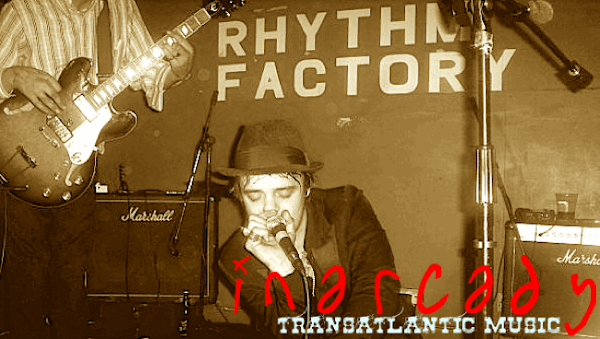
I’m in a minority in America-- I’m a Pete Doherty fan. The thing that surprises most Americans about Pete isn’t the shocking number of drug charges he’s racked up in the past few years. Or his bimonthly Youtube escapades with a brigade of kittens. It’s that he’s relatively famous in Britain. Besides the rare mention on E! as Kate Moss’ former erstwhile boyfriend and a lone Spin cover last year, Pete is largely under the radar in the United States. It’s a strange situation; he’s been selling tabloids for years in England, but Americans would be hard pressed to pick him out of a lineup of weedy, trilby-bedecked pale guys.
Why? Well, it certainly doesn’t help that his criminal record makes it virtually impossible for him to tour the U.S, leaving his work with Babyshambles and his stunning new solo effort, Grace/Wastelands, unpromoted. This would be a major problem for any artist, but it’s especially bad news for Pete because a lot of his shambolic charm is lost if you don’t get the live experience. I saw him twice in London this spring, with Babyshambles and then solo, and his performances profoundly changed the way I listen to his music. The emotion he brings to his lyrics in a live show lingers when you hear his albums again. Doherty can be infuriating-- he showed up at 2 a.m. for the Shambles gig I saw-- but he’s also incredibly compelling on stage. It might be his saving grace in the UK; no matter what he’s doing in the tabloids, he’s an undeniable talent.
The upside to Doherty’s complete lack of publicity in America is a lack of bad publicity. After years of exposure to Pete painting with his own blood, canceling strings of gigs, and cavorting online with Amy Winehouse and a litter of mice, English audiences have every right to be skeptical about the quality of his music. His reputation here is much more innocuous; “Isn’t that the guy who used to date Kate Moss? He does music?” He has an opportunity, especially in his new incarnation as the more serious, professional ‘Peter’ Doherty, to win over the US market. He doesn’t have to win over an alienated or critical audience, just win fans for the first time. Which should be easy if he can keep up the new persona; when he’s sober, it becomes apparent that he’s witty, likable, and an incredibly gifted performer.
So why not just push Grace/Wastelands without a tour? The album is terrific-- easily Pete’s most put-together, relaxed, accessible work. But is it accessible enough for an uninitiated audience? Half the joy of Pete’s work for UK fans is in the complex mythology of his musical past, the autobiographical nature of his work and legendarily volatile partnership with Carl Barat. Most of his fans have been listening since The Libertines (and listening hard; the crowd knew every word during his gig at Camden’s Proud in April, even when he broke out Libs b-side The Ha-ha Wall). It’s questionable whether he could make it without that kind of intensely dedicated fanbase, as well as the fawning support of the NME and the irrefutable evidence of his talent in the form of Up the Bracket. Plus there’s no real niche for him in America, no easy way to explain him to prospective listeners. At home he’s got an entire battalion of bands like The View and The Courteeners who desperately want to be The Libertines, bringing his music into at least a tributary of the mainstream. Here he’d be competing with the likes of Rihanna and Coldplay for radio time and end up falsely classified with acoustic, shoegazing American indie that populates our college radio stations.
Another huge hurdle might be the inherent Englishness of Pete’s music. In truth, it’s one of the things I find most compelling about his work. His vision of England as a Blakeian Albion is elegant and unique, but there’s no guarantee it will make any sense to a listener in San Diego. And even if it does, will it strike the same nerve of bittersweet nationalism? Lyrics have always been Pete’s strong point; Carl was the one who shaped The Lib’s punk sound. But understanding the myriad references, from Wilde to Stoppard, takes some investment and repeat spins, and will mean nothing to a casual listener. American audiences might wonder why they should bother dealing with “gin in teacups and leaves on the lawn” when they can just have “sex on fire.”
Like his notoriously unstable gigs, Pete Doherty’s image in America goes in a thousand directions. His image might be better without the constant parade of Sun covers, but he also might need that extra push of publicity--even the negative kind that spins him as a tragic genius/junkie-- to overcome the challenges that his nuanced, deeply British music presents for an international audience.
What a Waster?
Pete Doherty in America
I’m in a minority in America-- I’m a Pete Doherty fan. The thing that surprises most Americans about Pete isn’t the shocking number of drug charges he’s racked up in the past few years. Or his bimonthly Youtube escapades with a brigade of kittens. It’s that he’s relatively famous in Britain. Besides the rare mention on E! as Kate Moss’ former erstwhile boyfriend and a lone Spin cover last year, Pete is largely under the radar in the United States. It’s a strange situation; he’s been selling tabloids for years in England, but Americans would be hard pressed to pick him out of a lineup of weedy, trilby-bedecked pale guys.
Why? Well, it certainly doesn’t help that his criminal record makes it virtually impossible for him to tour the U.S, leaving his work with Babyshambles and his stunning new solo effort, Grace/Wastelands, unpromoted. This would be a major problem for any artist, but it’s especially bad news for Pete because a lot of his shambolic charm is lost if you don’t get the live experience. I saw him twice in London this spring, with Babyshambles and then solo, and his performances profoundly changed the way I listen to his music. The emotion he brings to his lyrics in a live show lingers when you hear his albums again. Doherty can be infuriating-- he showed up at 2 a.m. for the Shambles gig I saw-- but he’s also incredibly compelling on stage. It might be his saving grace in the UK; no matter what he’s doing in the tabloids, he’s an undeniable talent.
The upside to Doherty’s complete lack of publicity in America is a lack of bad publicity. After years of exposure to Pete painting with his own blood, canceling strings of gigs, and cavorting online with Amy Winehouse and a litter of mice, English audiences have every right to be skeptical about the quality of his music. His reputation here is much more innocuous; “Isn’t that the guy who used to date Kate Moss? He does music?” He has an opportunity, especially in his new incarnation as the more serious, professional ‘Peter’ Doherty, to win over the US market. He doesn’t have to win over an alienated or critical audience, just win fans for the first time. Which should be easy if he can keep up the new persona; when he’s sober, it becomes apparent that he’s witty, likable, and an incredibly gifted performer.
So why not just push Grace/Wastelands without a tour? The album is terrific-- easily Pete’s most put-together, relaxed, accessible work. But is it accessible enough for an uninitiated audience? Half the joy of Pete’s work for UK fans is in the complex mythology of his musical past, the autobiographical nature of his work and legendarily volatile partnership with Carl Barat. Most of his fans have been listening since The Libertines (and listening hard; the crowd knew every word during his gig at Camden’s Proud in April, even when he broke out Libs b-side The Ha-ha Wall). It’s questionable whether he could make it without that kind of intensely dedicated fanbase, as well as the fawning support of the NME and the irrefutable evidence of his talent in the form of Up the Bracket. Plus there’s no real niche for him in America, no easy way to explain him to prospective listeners. At home he’s got an entire battalion of bands like The View and The Courteeners who desperately want to be The Libertines, bringing his music into at least a tributary of the mainstream. Here he’d be competing with the likes of Rihanna and Coldplay for radio time and end up falsely classified with acoustic, shoegazing American indie that populates our college radio stations.
Another huge hurdle might be the inherent Englishness of Pete’s music. In truth, it’s one of the things I find most compelling about his work. His vision of England as a Blakeian Albion is elegant and unique, but there’s no guarantee it will make any sense to a listener in San Diego. And even if it does, will it strike the same nerve of bittersweet nationalism? Lyrics have always been Pete’s strong point; Carl was the one who shaped The Lib’s punk sound. But understanding the myriad references, from Wilde to Stoppard, takes some investment and repeat spins, and will mean nothing to a casual listener. American audiences might wonder why they should bother dealing with “gin in teacups and leaves on the lawn” when they can just have “sex on fire.”
Like his notoriously unstable gigs, Pete Doherty’s image in America goes in a thousand directions. His image might be better without the constant parade of Sun covers, but he also might need that extra push of publicity--even the negative kind that spins him as a tragic genius/junkie-- to overcome the challenges that his nuanced, deeply British music presents for an international audience.
Subscribe to:
Posts (Atom)